



Self-employed health insurance is just a plan you buy for yourself because no employer is buying it for you. For most freelancers, contractors and one-person businesses, that means a plan from the Health Insurance Marketplace at HealthCare.gov (or your state’s own Marketplace), and the price you pay depends a lot on the income you expect to earn this year.
Millennials and health insurance don’t usually come up in the same sentence. But once you work for yourself, it’s one of the biggest bills you’ll pay, and one of the few you can write off.
Below are the seven real ways to get covered, what each one costs you in practice, and how the tax deduction works so you don’t leave money on the table.
Your self-employed health insurance options
Here’s the short version. Most people end up on the Marketplace, but the right pick depends on whether you just left a job, whether a spouse has coverage, and how much you expect to make.
| Option | Best for | Watch out for |
|---|---|---|
| Marketplace plan | Most self-employed people, especially if your income qualifies for savings | Savings are based on your income estimate, so guessing low can mean paying some back at tax time |
| Spouse’s job plan | Couples where one person has job-based coverage that includes spouses | You usually won’t qualify for premium tax credits, and you can’t deduct premiums for months you could join it |
| COBRA | Keeping your exact plan and doctors right after you leave a job | You can be charged up to 102% of the plan’s cost, and it doesn’t last forever |
| Medicaid or CHIP | Low-income years, which happen a lot when a business is new | You have to apply to find out, but you can apply any time of year |
| Catastrophic plan | People under 30, or anyone with a hardship exemption | Mostly worst-case protection, so compare it with a Bronze or Silver plan if you qualify for savings |
| Short-term plan | A short gap, like the months between a job and Open Enrollment | Doesn’t meet ACA essential benefit rules, can exclude pre-existing conditions and gets no tax credit |
| Buying direct from an insurer | People who wouldn’t qualify for Marketplace savings anyway | The only way to get the premium tax credit is through the Marketplace |
1. The Health Insurance Marketplace (HealthCare.gov)
This is where most self-employed people should start. The federal government runs the Marketplace at HealthCare.gov for most states, and some states run their own. It’s also where you’d look if you need insurance for your small business beyond your own health plan.
Do you count as self-employed?
HealthCare.gov says you do if you have a business that takes in income but doesn’t have any employees. Freelancers, consultants and independent contractors all count. Hiring independent contractors doesn’t make you an employer, but people you pay on a W-2 generally do.
When you apply, you find out if you qualify for premium tax credits and other savings based on your income and household size. You also get screened for free or low-cost Medicaid or CHIP coverage, so it’s worth applying even in a slow year.
Pick a metal level
Plans come in four metal levels. The percentages below are HealthCare.gov’s estimates of how the costs split, not a promise on any single bill.
| Metal level | Plan pays | You pay | Deductible |
|---|---|---|---|
| Bronze | 60% | 40% | High |
| Silver | 70% | 30% | Moderate |
| Silver with extra savings | 73% to 94% | 6% to 27% | Low |
| Gold | 80% | 20% | Low |
| Platinum | 90% | 10% | Low |
If you rarely see a doctor, Bronze keeps the monthly bill low. If your income qualifies you for cost-sharing reductions, a Silver plan can be the best deal on the whole page, because those extra savings only come with Silver.
How to estimate your income
This is the part that trips up freelancers. You put your net self-employment income on the application (what’s left after business expenses), and HealthCare.gov bases your savings on your estimate for the year you’re getting coverage, not on last year.
Why does it matter?
The premium tax credit gets settled when you file your taxes. If you got more credit than your final income qualifies for, you pay the difference back with your return. If you got less, the rest lowers your tax bill or raises your refund.
So guess honestly, and if a big contract lands mid-year, update your application instead of waiting for April.
When you can sign up
Open Enrollment starts November 1 and ends January 15. Enroll or change plans by December 15 (and pay your first premium) if you want coverage to start January 1.
Outside that window you need a Special Enrollment Period, which comes from a life event like moving, getting married, having a baby or losing other coverage. Leaving a job and losing your work plan counts. Medicaid and CHIP don’t have an enrollment window at all. Dates and rules are on HealthCare.gov’s dates and deadlines page.
2. A spouse’s or partner’s job plan
If your spouse has job-based coverage that includes spouses and dependents, that’s often the cheapest route. Just know the trade-offs.
HealthCare.gov says that if your spouse’s plan covers spouses and dependents, you usually won’t qualify for premium tax credits on the Marketplace. And the IRS won’t let you take the self-employed health insurance deduction for any month you were eligible for an employer-subsidized plan through your spouse, even if you didn’t sign up for it.
Bottom line: price both. Compare what the spouse’s plan costs out of their paycheck with what a Marketplace plan would cost you after the deduction.
3. COBRA after you leave a job
Just went out on your own? COBRA health insurance lets you keep the same plan you had at your old job, usually for up to 18 months. Same doctors, same network.
The catch is the price.
Your old employer isn’t splitting the bill anymore, and the Department of Labor says you may have to pay the entire premium, up to 102% of the cost to the plan.
Losing job-based coverage also opens a Special Enrollment Period on the Marketplace, so get a Marketplace quote before you sign the COBRA election. For a lot of people, a Marketplace plan with savings is far cheaper.
4. Medicaid or CHIP in a lean year
The first year of a business can be rough on income. If yours drops low enough, you (or your kids, through CHIP) may qualify for free or low-cost coverage. There’s no separate hoop to jump through, since the Marketplace application screens you for both. And unlike private plans, you can enroll in Medicaid or CHIP any time of year.
5. Catastrophic plans if you’re under 30
Catastrophic plans are built for worst-case protection. You can buy one if you’re under 30, or if you qualify for a hardship or affordability exemption.
They cover at least three primary care visits a year before you meet the deductible, and preventive care is free. HealthCare.gov’s own advice is worth repeating, though: if you qualify for the premium tax credit or cost-sharing reductions, a Bronze or Silver plan may be the better value.
6. Short-term health insurance for a gap
You can buy short-term health insurance outside of the usual enrollment period, which is the whole point of it. It’s useful for a gap, like the stretch between leaving a job in the spring and the next Open Enrollment.
You can usually find ones that have high deductibles but low monthly premiums. Or you can find one that will replicate your previous coverage, but it will likely have high monthly premiums.
Either way, you can shop for short-term health insurance plans by using Pivot Health. Its plans run from 1 month up to 1 year, most use an all-access network so you can see any provider or facility, and coverage can start as soon as the next day. Availability and how long a policy can last vary by state.
I’ve used them when I needed some health insurance for the year and wanted something cheap but still covered me in case of any emergencies. You can choose from either an All-Access doctor network, or a PPO plan (better option).
Here’s how the process went:
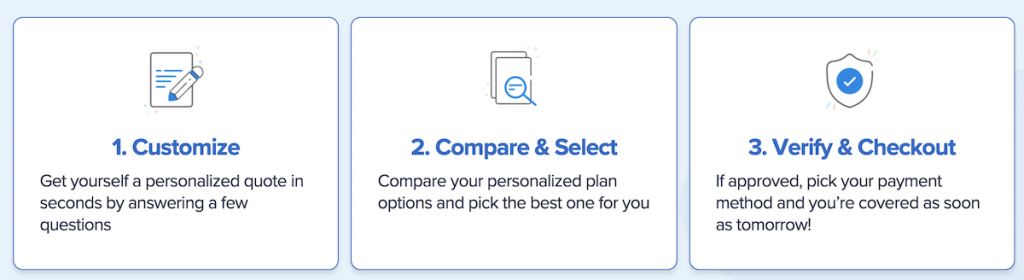
Know what you’re giving up.
Pivot Health says its plans do NOT meet the essential benefit requirements of the Affordable Care Act, and they can limit coverage for medical conditions you had before the policy started. Short-term plans also aren’t Marketplace plans, so there’s no premium tax credit.
So it’s a bridge, not a home.
I’d recommend getting more information from Pivot Health, if you’re looking for economical options. Then move to a Marketplace plan at Open Enrollment.
7. Buying direct, and other routes
You can buy private health insurance by going to insurance companies’ websites directly, such as Aetna, Blue Cross Blue Shield and Cigna. Some industry groups (a freelancers union, for example) may also offer discounted health insurance options for members.
One thing to remember: the only way to get the premium tax credit is through the Marketplace. If you’d qualify for savings, buying direct means paying full price for nothing.
Got even one employee besides yourself, a spouse, a family member or an owner? Then the Marketplace has a separate program for small businesses that may let you cover yourself and your team.
Pair your plan with an HSA
A health savings account lets you put money away for medical bills tax-free, and it’s one of the best tools a self-employed person has. You need to be covered by an HSA-eligible high-deductible health plan (HDHP) to contribute.
Good news if you buy on the Marketplace: as of January 1, 2026, the IRS says bronze and catastrophic plans available through an Exchange count as HSA-compatible. Starting the same date, people in certain direct primary care arrangements can also contribute.
| 2026 HSA figure | Self-only | Family |
|---|---|---|
| Most you can contribute | $4,400 | $8,750 |
| HDHP minimum deductible | $1,700 | $3,400 |
| HDHP out-of-pocket maximum | $8,500 | $17,000 |
Since there’s no employer HSA, you open one yourself. Lively is free for individuals and families, and investing the balance is optional (an additional fee may apply). If you want to compare more providers, here are the best HSA accounts side by side.
The self-employed health insurance deduction
This is the part that makes self-employed health insurance a lot less painful. If you qualify, you deduct your premiums on Schedule 1 (Form 1040), line 17, which lowers your income tax.
You can take it if one of these is true for the 2025 tax year, per the IRS instructions for Form 7206:
- You had a net profit on Schedule C or Schedule F.
- You were a partner with net self-employment earnings.
- You used an optional method to figure net earnings on Schedule SE.
- You got wages from an S corporation where you own more than 2%.
What counts?
Premiums for medical, dental and vision insurance, plus qualified long-term care insurance, for you, your spouse and your dependents. A child who was under 27 at the end of the year counts even if they aren’t your dependent. Medicare premiums you pay voluntarily can count too.
A few rules people miss:
- No deduction for any month you were eligible for an employer-subsidized plan, including through a spouse’s job, even if you didn’t enroll.
- It doesn’t lower self-employment tax. It only reduces income tax.
- The plan has to be set up under your business. For a sole proprietor, the policy can be in your name or the business’s name.
- If your plan came from the Marketplace and you got the premium tax credit, the two interact. The IRS points you to Publication 974 for that math.
You need Form 7206 (instead of the simple worksheet) if you had more than one source of self-employment income, file Form 2555, or count long-term care premiums. Those long-term care premiums are capped per person by age:
| Age at end of 2025 | Most you can count |
|---|---|
| 40 or younger | $480 |
| 41 to 50 | $900 |
| 51 to 60 | $1,800 |
| 61 to 70 | $4,810 |
| 71 or older | $6,020 |
If that sounds like a lot of moving parts, it’s a good reason to use one of the best tax preparation services the first year you claim it.
How to keep the cost down
A few moves that actually lower what you pay:
- Apply on the Marketplace even if you think you earn too much. The screening is free.
- Pick Silver if you qualify for extra savings, and Bronze (with an HSA) if you’re healthy and want the lowest premium.
- Stay in network. Preventive care is free on Marketplace plans when you see an in-network provider.
- Claim the deduction every year, and keep your premium statements with your business records.
For more ways to cut the cost of your health insurance premiums and your bills after you’re covered, we put together a full list.
Frequently asked questions
For most people it’s a Marketplace plan from HealthCare.gov or your state’s Marketplace, because that’s the only place you can get the premium tax credit. If your spouse has job-based coverage that includes spouses, price that too. Short-term plans only make sense for a gap.
Usually, yes. If you had a net profit on Schedule C (or qualify another way), you can deduct premiums for medical, dental, vision and qualified long-term care insurance for yourself, your spouse and dependents on Schedule 1, line 17. You can’t count months you were eligible for an employer-subsidized plan, including a spouse’s.
No. The IRS says you can’t subtract it when figuring net earnings for self-employment tax from the business the plan is set up under. It lowers your income tax only.
Use your expected net self-employment income for the year you want coverage, not last year’s income. If you end up earning more and got too much premium tax credit, you pay the difference when you file. Update your application if your income changes a lot.
Only with a Special Enrollment Period, which comes from a life event like losing other coverage, moving, getting married or having a baby. Medicaid and CHIP are open all year. Short-term plans can also be bought any time, but they don’t follow ACA rules.
Often the Marketplace, especially if your income qualifies for savings. COBRA can charge up to 102% of what the plan costs, since your old employer stops paying its share. Losing job coverage lets you enroll on the Marketplace, so compare both before you decide.
Yes, as long as you’re covered by an HSA-eligible high-deductible plan. As of January 1, 2026, bronze and catastrophic plans count. For 2026 you can put in up to $4,400 for self-only coverage or $8,750 for family coverage, plus $1,000 more if you’re 55 or older.
Bottom line
Bottom line: start on the Marketplace, estimate your net income honestly, and claim the deduction at tax time. Use COBRA or a short-term plan only to bridge a gap.
I understand the difficulty of starting a business, and health insurance is a priority for you so make sure you pick the right plan for yourself.

