



Wedding debt is any money you borrow to pay for the wedding: a credit card balance, a personal loan, a loan from family. The cheapest wedding debt is the debt you never take on. If you do borrow, borrow a fixed amount you can clear in about a year, at the lowest rate you can get. If you already owe, there is a clear order for paying it down.
Set the budget from what you can save each month, not from the wedding you pictured. Borrow only the gap, and only if the payoff date fits inside a 0% intro period or a short fixed loan. A balance at the average credit card rate costs about twice what the average bank personal loan does.
Below: what weddings cost now, how to pay for one with little or no borrowing, what each way of borrowing really costs, how to pay off wedding debt you already have, and how one couple cleared $9,000 in nine months.
What a wedding costs now
The two big wedding sites publish a number every year. Both are industry surveys of their own users, so treat them as a ballpark, not a census.
The Knot’s 2026 Real Weddings Study put the average 2025 wedding at $34,000, with 117 guests. That works out to $292 a guest, up $8 from 2024. Zola’s 2026 First Look Report, a survey of couples marrying in 2026, puts the average at $36,000 for the second year in a row.
Those are averages, and big-city weddings pull them up. Your number can be far lower. The per-guest figure is the useful one: at $292 a head, cutting 20 guests saves close to $6,000 before you touch anything else.
Zola also reports that 88% of couples put in their own money, and 31% use credit cards for wedding expenses. Using a card is not the same as carrying debt. A card you pay in full each month is a payment method. A card you cannot pay off is a loan at around 21%.
Pay for it without debt first
Start with the money, then plan the wedding. Most couples do it the other way around, and that is how the balance shows up.
- Pick a monthly number. Decide what the two of you can set aside every month without missing rent, minimum payments or your emergency fund.
- Multiply by the months you have. $1,000 a month for 18 months is an $18,000 wedding. Add any family gifts that are actually promised. That total is the budget.
- Move the date or the guest list before you move the budget. A longer engagement is free money. So is a shorter guest list.
- Park the savings where it earns interest. A high-yield savings account keeps the wedding fund separate and pays you while you wait.
- Hold back about 10% for surprises. Zola’s 2026 Wedding Spend Survey found hidden costs added an average of $3,314, roughly 9% of the total.
If the gap is small, earning it is usually cheaper than borrowing it. A few months of extra income can cover a photographer. If you need a savings target to aim at, here are realistic ways to save $1,000 a month.
Be honest about what the wedding is competing with. If you are still paying off student loans or saving for a down payment on a house, every borrowed wedding dollar pushes those back.
More10 ways to save on a wedding
If you borrow: what each option really costs
Sometimes the math still leaves a gap, and you would rather borrow than wait. That can work if the amount is fixed and the payoff date is close. Here is how the four common options compare.
| Option | What it costs | Biggest risk |
|---|---|---|
| 0% intro APR credit card | No interest during the intro period, often a transfer fee | Whatever is left when the intro ends gets the card’s regular rate |
| Personal loan (a “wedding loan”) | Fixed rate. Banks averaged 11.86% on 24-month loans in Q2 2026 | A fixed payment for years, and your own rate depends on your credit |
| Loan from family | Often little or no interest | The relationship, if the terms are vague or you pay late |
| Regular credit card | Cards that were charged interest averaged 22.15% in Q2 2026 | No end date. Minimum payments can stretch it for years |
To put dollars on it, here is $10,000 paid off three ways. The loan and card rows use the Federal Reserve’s average rates for the second quarter of 2026. The first row uses the terms Discover listed when we checked.
| $10,000 borrowed | Monthly payment | Paid off in | Interest and fees |
|---|---|---|---|
| 0% intro card, 3% transfer fee | About $667 | 15 months | $300 |
| Personal loan at 11.86% | About $470 | 24 months | About $1,282 |
| Credit card at 22.15% | About $520 | 24 months | About $2,469 |
Our math, for illustration. Averages are not quotes. Your rate depends on your credit, and the loan row assumes no origination fee.
A 0% intro APR credit card
This is the cheapest way to borrow if you can clear the balance before the intro period ends. You pay vendors on the card, or move an existing balance to it, and pay no interest for a set number of months.
The rules are worth knowing. The Consumer Financial Protection Bureau (CFPB) says an intro rate has to last at least six months, unless you are more than 60 days late on a payment. The issuer has to tell you how long it lasts and what rate comes after.
When the intro period ends, the regular rate applies to whatever you still owe. On the Discover page we read for this update, that was a 0% intro APR for up to 15 months on purchases and balance transfers, then an 18.49% to 28.49% variable APR, with a 3% intro fee on transferred balances. The card you are offered can differ.
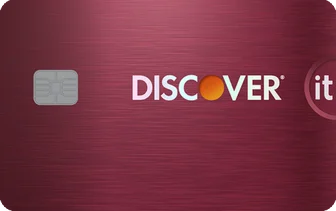
- Intro Offer: Get a $100 bonus when you use your card in the first 3 months.
- Cashback Match: At the end of your first year, Discover will match all the cash back you’ve earned with no limits. If you earn $150 in cash back, Discover will double it to $300!
- 5% Cash Back: Earn 5% cash back on rotating categories like Amazon, grocery stores, restaurants, gas stations, and PayPal purchases (up to the quarterly maximum when activated).
- 1% Cash Back: Earn unlimited 1% cash back on all other purchases automatically.
- Flexible Rewards: Redeem cash back at any time, in any amount, with no expiration on rewards.
Do one piece of math before you swipe. Divide the amount by the number of intro months. If you cannot pay that every month, the card is too small a window for this much wedding.
Watch for a lookalike. Store cards and some vendor financing offer “no interest if paid in full” in 12 months. That is deferred interest, and it works differently. Miss the deadline by a dollar and, the CFPB warns, you can owe all of the interest back to the date of the purchase.
A personal loan marketed as a wedding loan
A wedding loan is a personal loan with a wedding photo on the ad. You get a lump sum, a fixed rate and a fixed monthly payment over a set term. Nothing secures it, so the rate rests on your credit and income.
The upside is a real end date and a rate that is typically well under a credit card’s. The Fed’s 11.86% average for a 24-month bank loan is about half its 22.15% average for cards that were charged interest.
The downsides are just as real. That average is not your quote, and weaker credit means a much higher rate. Some lenders take an origination fee out of the money before it reaches you. And the payment follows you into the marriage, due every month whether or not money is tight.
If you go this way, compare the APR, not the interest rate, because the APR counts the fees. Pick the shortest term whose payment you can handle. A better score gets a better rate, so it can pay to improve your credit score before you apply. Our list of the best personal loans shows what lenders are advertising now.
A loan from family
Family money is usually the cheapest on paper and the most expensive if it goes wrong. There is no credit check and often no interest. There is also no contract unless you write one, and a late payment to your in-laws costs more than a late fee.
Treat it like a real loan. Write down the amount, the monthly payment and the date it ends, and have both of you and the lender sign it. Agree up front on what happens if you miss a month. If any of that feels too awkward to discuss, that is your answer.
A regular credit card
This is the default, and the most expensive option here. It is fine as a payment tool if you pay the statement in full. As a loan, it is the one to avoid. There is no end date, the rate is the highest of the four, and minimum payments are built to keep you paying.
If the wedding is already on a card at a regular rate, skip to the next section. That balance is the first thing to fix.
How to pay off wedding debt you already have
The wedding is over and the balance is not. Start by writing down every debt the two of you have: the balance, the rate and the minimum payment. Then check whether the total is a problem or just a project. This guide on whether you have too much debt helps you tell the difference.
Then stop adding to it. A balance you are still charging on does not go down. After that, work through these in order.
1. Pick a payoff order: avalanche or snowball
Both methods have you pay the minimum on everything and throw every spare dollar at one debt. The only difference is which one.
| Method | Pay first | Why pick it | Trade-off |
|---|---|---|---|
| Avalanche | The highest interest rate | Costs the least in interest | The first win can take a while |
| Snowball | The smallest balance | Quick wins keep you going | You may pay more interest overall |
The CFPB describes the trade the same way: the highest-rate method saves the most money, and the snowball shows progress sooner. If the wedding card is both your smallest balance and your highest rate, you do not have to choose. Start there. Our guide on how to pay off debt fast walks through building the plan.
2. Move a card balance to a 0% balance transfer
If your credit is good, a balance transfer card can stop the interest while you pay the balance down. Every payment goes to what you owe. The CFPB lists four things to know first:
- The promo rate is temporary. After it ends, the rate on the new card may rise, and so does your payment.
- There is usually a fee. It is typically a percentage of what you move or a flat amount, whichever is more. At 3%, moving $9,000 costs $270.
- New purchases can cost you. Buy on the same card and you get no grace period on those purchases until the whole balance is paid, transfer included.
- Late payments can end the deal. More than 60 days late, and the issuer can raise the rate on every balance on the card.
So use the card for the transfer and nothing else, set up autopay, and divide the balance by the promo months to get your payment.
3. Consider a consolidation loan
A debt consolidation loan pays off your cards and leaves you with one fixed payment and an end date. It helps when the loan’s APR is clearly lower than your cards and you stop using the cards afterward.
It can also backfire. The CFPB’s caution is that a lower monthly payment often just means a longer loan, so you can pay more in total. And taking on new debt to pay old debt does not work unless the spending changes. We cover the full math in is debt consolidation a good idea.
4. Get free help from a nonprofit credit counselor
If you cannot make the minimums, or the plan is not working, talk to a nonprofit credit counselor before anything else. The CFPB’s own advice on consolidating debt starts there. A counselor reviews your whole budget and can set up a debt management plan: you make one payment to the agency, and it pays your creditors, often at lower interest rates.
Know the limits. A counselor cannot erase what you owe, and agencies are allowed to charge fees for a plan, so ask what it costs up front. To find one, start with an agency affiliated with the National Foundation for Credit Counseling (NFCC), which the CFPB names as a place to start.
Do not confuse this with debt settlement. The CFPB describes debt settlement and credit repair firms as typically for-profit companies that charge for things you can do yourself for free.
MoreHow to pay off credit card debt when you have no money
How we paid off $9,000 of wedding debt in nine months
Paying for a wedding is especially hard when you have other financial commitments. When we got married, my now-husband and I ran into exactly that. So we decided to use debt to pay for part of our wedding. Here is how we made that decision and how we paid it off.
Our wedding budget
The very first wedding planning conversation we had was about how we would pay for the wedding. We came up with our budget first and made our plans based on it. Notice that we did not start with our “wedding vision.” Starting there would have gotten us in major trouble.
Our budget was based on how much we could contribute out of our monthly paychecks. Together, we agreed to save $1,000 per month toward the wedding, and we committed to keeping that up for 24 months. So our shared wedding budget was $24,000.
But here is the problem: we did not want to wait two years to get married. The solution? Debt. We willingly agreed to fund part of our wedding budget with borrowed money.

We borrowed only what we needed
Figuring out how much to borrow was easy: we let our budget and our wedding date decide for us. We stuck to our original budget of $24,000, and we funded it from our paychecks every month up to our wedding day.
When we did the math, we figured that we would have $15,000 saved up by our wedding day. That left us with $9,000 to fund with debt. So we borrowed exactly $9,000.
We had the ability to borrow much more than $9,000, but we stayed within our budget and did not borrow a cent more than we needed. That took a lot of discipline. As much as we would have liked a more extravagant honeymoon, we preferred to keep our debt under control.
We made consistent payments
In the 15 months leading up to the wedding, we put away $1,000 every month. To do it, we spent less on dining out, traveling and entertainment. If we had not been consistent, our whole plan would have fallen apart.
After our wedding day, we kept paying $1,000 a month toward the wedding debt. Since we had already been setting that money aside for 15 months, the debt did not feel like a new burden. We just kept doing what we were doing, and we paid off our wedding debt in nine months.
We celebrated our first anniversary debt-free, and it felt amazing. It was our first financial goal as a married couple, and I think that success getting out of debt set a positive tone for our money as a couple.
We paid zero interest
Our final strategy was to pay as little interest as possible, and we did not pay any interest at all. Because of my credit score, I had several low-rate personal loan and balance transfer offers, and we took one of them.
We used a balance transfer that cost us a one-time 2% fee, which was $180, and it let us borrow $9,000 at zero percent interest for the first 15 months. Since we already planned to pay the debt off within nine months of the wedding, we knew this was a good call.
My take: debt is a tool. If you are smart about borrowing, and you have a solid repayment plan before you borrow, you are in good shape. Coming up with the budget before anything else is what made it work. It is a lot like getting pre-approved for a mortgage before you shop for a house.
Keep wedding debt from becoming a marriage problem
Debt causes the most trouble when one person carries it quietly. Three habits keep it out in the open.
- Put every balance on the table. Both of you should know the total, the rates and whose name is on each account.
- Agree on one payoff date. A shared deadline turns “your card” into “our plan.”
- Check in monthly. Ten minutes with the numbers is enough. A budget app for couples can keep both of you looking at the same balances, and a joint bank account makes one shared payment easy.
The wedding is one day. The plan you build to pay for it is the first money plan of your marriage, so build one you can both keep.
Wedding debt FAQs
Yes, if your credit is good enough to qualify. Discover it Cash Back listed a 0% intro APR for up to 15 months on balance transfers, with a 3% intro transfer fee, when we checked. Moving $9,000 at that fee costs $270. Divide the balance by the intro months and pay that amount every month, because the regular rate applies to whatever is left when the intro period ends.
It can be, if the amount is fixed and you can pay it off in about a year. Borrowing a set gap on a 0% intro card or a short fixed-rate loan is very different from letting vendor bills pile up on a regular card at around 21%. If you cannot name the payoff date before you borrow, shrink the wedding instead.
A wedding loan is an unsecured personal loan that a lender markets for wedding costs. You get a lump sum and repay it in fixed monthly payments at a fixed rate. Banks charged an average of 11.86% on 24-month personal loans in the second quarter of 2026, according to the Federal Reserve, but your rate depends on your credit.
The Knot’s 2026 Real Weddings Study put the average 2025 wedding at $34,000 with 117 guests, about $292 a guest. Zola’s 2026 First Look Report puts the average at $36,000. Both are industry surveys of their own users, so use them as a ballpark.
The avalanche pays the highest interest rate first and costs the least in interest. The snowball pays the smallest balance first and gives you quick wins. The CFPB’s guidance is to pick the highest-rate method if saving money motivates you, and the snowball if seeing progress does.
A nonprofit credit counselor can review your budget and set up a debt management plan with your creditors. The CFPB describes credit counseling as free or low-cost advice and names the National Foundation for Credit Counseling as a place to find a counselor. A debt management plan can carry fees, so ask what it costs first.

