



Should you buy travel insurance? For a big, prepaid trip you can’t afford to lose, or any trip outside the U.S., usually yes. For a cheap weekend you could cancel for free, usually no.
That’s the short version. The longer one comes down to two questions: how much money would you lose if the trip fell apart, and who pays the hospital bill if you get sick far from home?
Most people see the offer at checkout, right after they book the flight, and have about five seconds to decide.
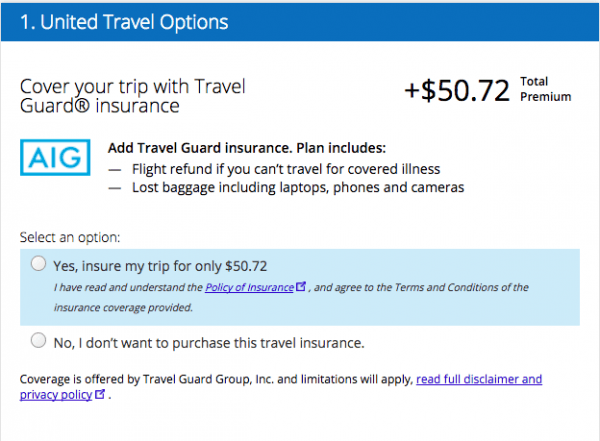
Don’t click yes or no on autopilot. Check what you already have first (your credit card might cover more than you think), then buy only the part that fills the gap.

Is Travel Insurance Worth It? The Short Answer
It’s worth it when the loss would really hurt. Here’s how that usually plays out:
| Your trip | Buy it? | Why |
|---|---|---|
| Trip outside the U.S. | Usually yes | Your health plan may not pay abroad |
| Big prepaid, nonrefundable trip | Usually yes | Cancellation cover protects what you’d lose |
| Cruise or remote destination | Yes, with evacuation | Getting you to a hospital is the expensive part |
| Cheap trip, refundable bookings | Usually no | There’s little money at risk |
| Domestic trip, good health plan | Maybe not | You’re mostly covered already |
Your own situation decides it. A pre-existing health condition or a shaky work schedule tips the scale toward buying.
Bottom line: insure what you can’t afford to lose, and skip the rest.
What Travel Insurance Covers
The National Association of Insurance Commissioners breaks travel insurance into a few main types: trip cancellation, interruption and delay, baggage loss and delay, travel medical, medical evacuation, and cancel for any reason. Most “comprehensive” plans bundle the first four, and every one of them pays only up to the limit written in the policy.
So read the limits, not just the list.
Trip cancellation and interruption
This is the part most people are actually buying. If you have to cancel before you leave, or cut the trip short, for a reason the policy covers (you get sick, a family emergency, severe weather and so on), it pays back your prepaid, nonrefundable costs.
The catch is the words “covered reason.” Deciding you just don’t feel like going isn’t one. That’s what cancel for any reason is for, and it costs extra (more on that below).
Travel medical coverage
This one matters most outside the U.S. The CDC says most standard health plans might not cover the full cost of emergency care or medical evacuation abroad, and that travelers should be prepared to pay out of pocket when they get care, then send the bills to their insurer later.
Do you know whether your plan covers you overseas? Most people have never checked. If you buy your own coverage, it’s worth a look at what your health insurance policy says about out-of-network and foreign care before you go.
Emergency medical evacuation
If you’re hurt somewhere without the right hospital, evacuation coverage pays to move you to one. That can mean an air ambulance, and it’s the bill nobody wants to see.
Many comprehensive plans include it up to a limit. You can also buy evacuation-only or medical-only plans if you’ve already got your trip costs covered some other way. It’s a big deal on cruises, safaris, hikes and anywhere remote.
Related: Why You Need An Emergency Fund and How To Build One
Baggage loss and delay
Baggage coverage pays for bags that are lost, damaged or stolen, and some plans pay for essentials while you wait on a delayed bag. The limits are usually low next to what’s in a laptop bag, so keep electronics and anything expensive in your carry-on.
The NAIC also points out that you may already have some coverage for your stuff through a homeowners policy or a credit card, which brings us to the next part.



Check What You Already Have First
A lot of people pay for travel insurance twice without knowing it. Before you buy, look at three places.
Your credit card
Some cards include trip protection when you pay for the trip with that card. It’s not the same as a full travel policy, but it can cover the cancellation part.
The Chase Freedom Unlimited® is a $0 annual fee card, and Chase’s card page says its Trip Cancellation and Interruption Insurance can reimburse you up to $1,500 per covered traveler and $6,000 per trip for prepaid, nonrefundable passenger fares if your trip is canceled or cut short by sickness, severe weather or other covered situations. It also comes with auto rental coverage (secondary to your personal insurance in the U.S.) and travel and emergency assistance. That last one gets you legal and medical referrals, but you pay for whatever services you use.
What it doesn’t list is medical coverage for you abroad. So for an international trip, a card like this handles the money you prepaid, and you’d still want a medical plan.
The Platinum Card from American Express goes further on the trip side. Its card page lists Trip Cancellation and Interruption Insurance, Trip Delay Insurance and Car Rental Loss and Damage Insurance, and the Amex trip cancellation terms cap trip cancellation coverage on eligible Amex cards at $10,000 per covered trip and $20,000 per card per 12 consecutive months, so check your own card’s benefit terms before you count on it. It’s a premium card with an annual fee, so it only pays off if you travel a lot.
Card benefits come with rules (usually that you paid for the trip with that card), so pull up your card’s benefits guide before you count on it. If you’re comparing cards, here’s our list of the best credit cards.
Your health insurance, or Medicare
Call your plan or check its member site for “foreign travel” or “out of network emergency” coverage.
If you’re on Medicare, the answer is pretty clear. Medicare.gov says Medicare usually doesn’t cover health care while you’re traveling outside the U.S., with a few narrow exceptions, and that you pay all of the costs in most cases. It also notes that some Medigap policies may cover emergency care abroad. If you don’t have that, a travel medical plan is close to a must for an international trip.
What you booked
If your hotel and rental car cancel for free until the day before, you don’t need to insure them. The money at risk is the part you can’t get back. Add that up first, because that’s the number you’re insuring.
Renting a car? We covered that separately in do you need rental car insurance.
How Much Does Travel Insurance Cost?
According to the NAIC, travel insurance usually costs 5% to 10% of the total trip price. On a $3,000 trip, that’s roughly $150 to $300.
Your age, the trip cost, where you’re going and how much coverage you pick all move the price. A medical-only plan costs less than a plan that also insures your trip costs, which is why it’s worth knowing what you already have.
Is $150 to $300 worth it? If losing $3,000 would wreck your budget, probably yes. If you could shrug it off, maybe not.
Cancel for Any Reason: Is It Worth the Extra Cost?
Cancel for any reason (CFAR) is an upgrade that lets you cancel for, well, any reason and still get part of your money back.
The NAIC says CFAR gives you a partial refund of 50% to 75% of the total price, adds close to 50% to the cost of the travel insurance, and typically only lets you cancel 48 hours or more before departure. Using the example above, a $150 to $300 policy would run about $225 to $450 with CFAR.
It’s worth it if there’s a real chance you’ll back out for a reason a normal policy won’t cover, like a job that might not give you the time off. If not, regular trip cancellation coverage is usually enough.
Not every plan offers it. Travelex, for example, only sells CFAR as an upgrade on its Ultimate plan.
When to Skip Travel Insurance
You can probably skip it when the trip is cheap, your bookings are refundable, you’re staying in the U.S., and your health plan covers you where you’re going.
Also skip the add-on that pops up at checkout if you haven’t read what it covers. You can buy a plan on your own, compare it, and still be covered well before you leave.
And if you’d rather spend that money on the trip, these tips on how to travel cheap can save you more than a policy costs.
How to Buy Travel Insurance
Here’s the order to do it in.
- Add up your prepaid, nonrefundable costs. That’s the amount to insure.
- Check your credit card and health plan, so you don’t pay twice.
- Pick the type: a comprehensive plan, or just medical and evacuation if your card already covers cancellation.
- Buy soon after your first trip payment if you need cover for a pre-existing condition, since that usually has an early deadline (Travelex gives you 21 days).
- Read the policy wording for limits, exclusions and what counts as a covered reason, then save a copy with your trip documents.
Travelex is a good place to start a quote. Its comprehensive plans are Essential, Advantage and Ultimate, and you can buy those up to 11:59 p.m. the day before you leave.
Buy early if you can, though. Travelex says you can get coverage for pre-existing medical conditions if you buy its Ultimate plan within 21 days of your first trip payment, and you also need to insure all your prepaid, nonrefundable trip costs within those 21 days. It also gives you a 21-day free look on those three plans, so you can get a refund if you change your mind before you leave or file a claim.
Bottom Line
Is travel insurance worth it? For international trips and big prepaid trips, usually yes. For cheap, refundable, close-to-home trips, usually no.
Check your card and your health plan first, then buy only what fills the gap. That’s how you avoid paying for coverage twice and still don’t get stuck with a bill you can’t pay.
Related: 15 Tips On How to Travel Cheap and On a Budget
Frequently Asked Questions
Buy it when you’d lose real money if the trip fell apart, or when you’re leaving the U.S. and your health plan may not cover you there. Skip it for cheap trips with refundable bookings. If you decide to buy, Travelex lets you buy its Essential, Advantage and Ultimate plans up to 11:59 p.m. the day before you leave.
Usually, yes. Medicare.gov says Medicare usually doesn’t cover health care outside the U.S., and the CDC says most standard health plans might not cover the full cost of emergency care or medical evacuation abroad. Medical and evacuation coverage is the part that matters most overseas.
The NAIC says travel insurance usually costs 5% to 10% of the total trip price. On a $3,000 trip, that’s roughly $150 to $300. Adding cancel for any reason adds close to 50% to the cost, per the NAIC.
It might cover part of it. The Chase Freedom Unlimited® includes Trip Cancellation and Interruption Insurance of up to $1,500 per covered traveler and $6,000 per trip for prepaid, nonrefundable passenger fares. Card benefits usually don’t replace medical coverage abroad, so check your card’s benefits guide.
Only if there’s a real chance you’ll cancel for a reason a normal policy won’t cover. The NAIC says it refunds 50% to 75% of the total price, adds close to 50% to the policy cost, and typically requires you to cancel 48 hours or more before departure.
Often not, unless you buy early. Travelex says you can get coverage for pre-existing medical conditions if you buy its Ultimate plan within 21 days of your first trip payment and insure all your prepaid, nonrefundable trip costs.

